
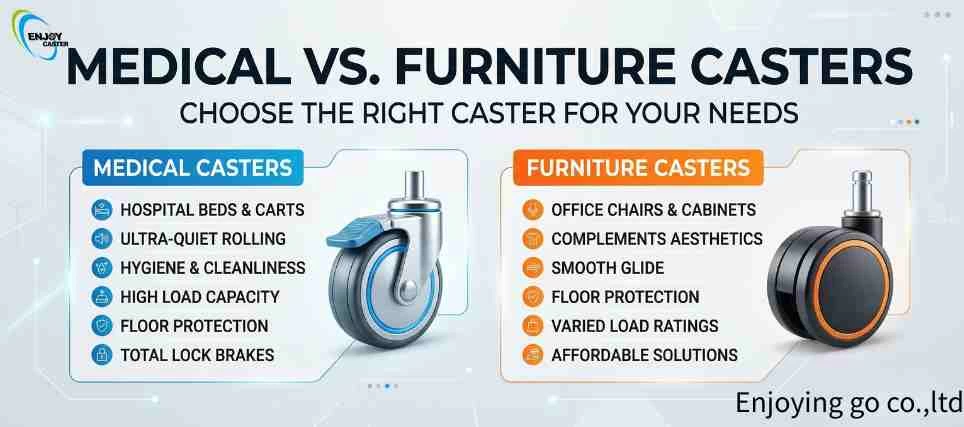
The Blurring Lines of Mobility Technology. In the past, medical casters and furniture casters existed in two separate worlds. One focused on extreme clinical functionality, the other on aesthetics and agility. However, as we move through 2026, a significant trend is emerging: Twin Wheel Casters, traditionally found in high-end furniture, are increasingly becoming the standard for modern healthcare equipment.
Traditional Medical Requirements: The Clinical Standard medical casters (such as those on hospital beds) are engineered for rigorous environments, such as operating rooms. Their primary focuses are:
-
Conductivity & Anti-static Properties: Protecting sensitive electronic diagnostics from interference.
-
Chemical Resistance: Withstanding frequent sterilization with harsh cleaning agents.
-
Central Locking Systems: Ensuring absolute stability during critical procedures.
The Shift: The Rise of Aesthetic Clinics & Boutique Healthcare. Demand is changing because the "Medical Environment" itself is evolving. Modern specialty clinics, aesthetic centers, and wellness facilities are moving away from a "cold lab" feel toward a more "home-like" interior design. These spaces often feature decorative flooring and utilize more compact, patient-facing devices like ultrasound monitors and laser therapy machines.
Why Twin Wheel Casters are the New Favorite Originally perfected for premium office furniture, twin wheel casters offer specific advantages that align perfectly with today’s healthcare settings:
-
Superior Weight Distribution: The twin-wheel structure increases the contact surface area, distributing the weight of the device more evenly and reducing the risk of marking delicate or wooden floors.
-
Effortless Maneuverability: In tight clinic rooms, the differential rotation of twin wheels allows for smoother swiveling, enabling practitioners to reposition equipment with minimal effort.
-
Aesthetic Integration: With their streamlined profiles, twin wheels blend seamlessly into the sophisticated design of modern medical devices, enhancing the overall professional image of the facility.
A Human-Centered Evolution: The adoption of twin wheel casters in healthcare reflects a broader industry shift toward Human-Centered Design. As medical environments become more inviting and less intimidating, high-quality mobility solutions serve as the bridge—combining the elegance of furniture design with the precision required by medical science.